
The Cases of the Missing Necklaces
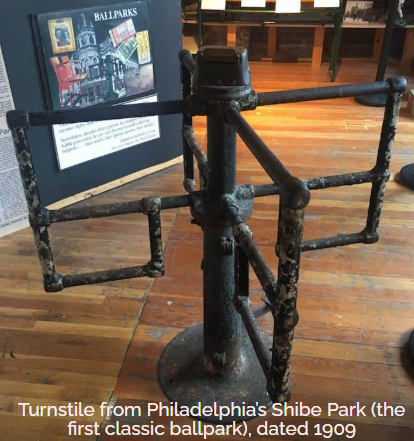
(photo and caption from The National Baseball Museum, Denver">
I was in the lounge of the Union League, about to order dinner, when a liveried fellow presented
me with Dr. Phil’s card. Written on the back, “Meet me at the Academy of Natural Sciences in 30
minutes: I will need you to witness an experiment.”
“Dr. Phil” wasn’t his real name, but it’s what everyone called Ctvrtek Leiptold Tetzloff, a noted
professor of phil-ology at the University of Pennsylvania. Increasingly, “linguistics” was the word
used to describe his primary field of study, but the bookish impression the doctor made publicly
was consistent with traditional philology, the study of manuscripts, especially ancient ones. His
fluency in a dozen languages earned him access to some truly bizarre texts. Occasionally, we
attended the same dinner parties, and Dr. Phil would regale scandalized guests with bawdy stories
about the sexual peccadilloes of the ancients that only he knew and had probably learned from
first-person accounts. Other than his erudition, Dr. Phil had established a reputation for being
hosted at the homes of colleagues, students, and admirers every night of the week; additionally,
he was rumored to have unsavory links to the black market in antiquities. My friends enjoyed
attributing several of the recent prized acquisitions made for the Penn archaeology collection to
Dr. Phil’s shady, international connections. The doctor’s outsized personality invited such
speculation.
Dr. Phil calling or asking me to do anything was unusual. Although we were acquainted and I had
been one of his students at Penn, we only saw each other at crowded dinner parties. Considering
the novelty of the summons, it was worth changing my plans, so I fetched my overcoat and hat
and walked at a brisk pace to the Academy of Natural Sciences by way of the recently completed
(for the fourth time, by my count) Benjamin Franklin Parkway, a city planner’s attempt to effect
Parisian cosmopolitanism that turned out to be more Appian than Champs Elysses. On the other
hand, imposing a diagonal line connecting City Hall, the Academy, and the Museum of Art across
the town’s drab, Quaker grid, works like H.G. Wells’s time machine to shorten distances.
The Academy was closed to the public in the evening, but they were hosting a private charity event,
sponsored by Jefferson Hospital for its fall “Is the Thymus Necessary?” campaign. Dr. Phil was
mesmerizing a small group at his table with stories from the 5000 years of written language. He
had kept a chair open for me, and I ordered a glass of sherry. A well-known Swarthmore coeducational, Miss Comfort Loosvelt, was sipping champagne and leaning towards the professor,
dressed in a manner appropriate to the daughter of one of the Pennsylvania Railroad’s biggest
stockholders.
When Miss Loosvelt asked Dr. Phil to explain a controversial position he had taken in an academic
journal, I was impressed with the heiress’s knowledge of the science involved and her assured
posing of the question. “Your opposition to Darwin’s theory so disaccommodated the members of
the Academy-- especially emeritus member of the board Joseph Leidy--I wondered what evidence
you presented disputing the Theory of Evolution to the paleontologist who named the dinosaur
fossil standing behind you and had a personal correspondence with Darwin himself?”
Visible from the balcony that wrapped around the atrium of the Academy building and, indeed,
as the ingenue described it, looming over Dr. Phil’s shoulder, was Leidy’s famous seventeen-foot tall reconstruction of Hadrosaurus foulkii, the first complete dinosaur skeleton. So far as I knew,
the Academy curated the largest collection of fossils in the world, and Leidy and others spent
decades organizing those puzzle pieces into a timeline demonstrating evolution theory. Dr. Phil
had caused a campus sensation when he professed evidence that life and, indeed, the geology of
the planet followed an active plan, not Darwin’s billions of years of random, incremental
adaptations.
I thought Dr. Phil treated himself to a glance at the young woman’s decolletage before replying to
her question. “Do you think me the kind of man, my dear, who is intimidated by a pile of rocks
named after Haddonfield, New Jersey?”
Looking into Dr. Phil’s eyes, Miss Loosvelt laughed. Then we all laughed. “These blind
paleontologists have no idea what the fossil record means! Is taxonomy all they do? Because their
only addition to human knowledge are new Latin words imbedding the surname of either a fossilhunting nincompoop or the ridiculously obscure town in which he found the rock.” Dr. Phil was
famous for his critiques of purely empirical conclusions about human reality.
“Paleontology means literally the study of old rocks. My objection to that is Earth’s own record
keeping doesn’t have the character of lifeless rock. Conventional natural history misses altogether
the true significance of the fossil record: those relics can be read as a text, a text that describes
dimensions invisible to modern man and impossible to express in any existing human language.
I have deduced a text, in which an unseen geometry explains the apparent randomness of
Darwin’s evolution.”
Dr. Phil paused to take a cigar from a leather covered box brought to the event by a man
introduced to us as Captain Durgin. Whether the weathered-looking man held a nautical or
military title, we did not know, as he wore no insignia. Dr. Phil lit the cigar and grinned behind a
cloud of fine tobacco.
“As everyone knows,” Captain Durgin said edgily, “Dr. Tetzloff always presents himself as
possessing secret knowledge, whether unearthed in an obscure archaeological dig or picked up
from a sporting tipster. Do tell, how did you—of all the people who ever took a breath—how did
you in particular decipher Creation’s blueprint?”
“Who else but me?” Dr. Phil laughed heartily. “In separate collections here and at Penn are two
fossils from the same site near Baghdad that was once ancient Sumer. They are stone panes, each
an inch thick. One of them records complex patterns of shoreline ripples accreting in the
sediment, overlapping layers that form a stop-motion portrait millions of years in the making.
The other stone pane is completely inscribed with cuneiform, mankind’s earliest written language.
The purpose of these markings as they are conventionally understood is to account for goods in
trade, but a portion of the fossilized panel has always been indecipherable.
“I believed parts of the Ur cuneiform were indecipherable because they represented structural
words, the words that indicate the relationship between nouns and verbs. Prepositions and
conjunctions haven’t material counterparts we can gesture at to teach others what they mean.
They enter language mysteriously.”
I must credit Dr. Phil for relating his far-fetched ideas with engaging conviction. “If you were
fortunate enough to study linguistics in my classroom, you learned the relationship between
objects in space, objects in time, and directions of movement are constrained by our constructions
of language. But what if, before language had evolved to express the physical relationship between
objects, these relative terms conveyed by structural words had some kind of material presence
that could be learned with gestures, as one can learn the word “chair” by pointing at a chair? What
if the decadence that erodes all languages diminished the ability to conceptualize other
dimensions, so that in our time, we can barely communicate either where we are cosmically or
where we stand relative to anyone else?”
“Now, Dr. Phil,” I said, “by 10 pm, no one who attended the dinner in your honor at Class of ’25
House last month could say where they were, either.”
The professor took a deep puff of his cigar. Then, he leaned close to Miss Loosvert for dramatic
effect. “Through a structural analysis of the cuneiform, I was able to identify a cipher resembling
an inverted “Y” in predictable patterns, inscribed in clay by both humans and the ebb and flow of
the Tigris River on mud flats.” He patted the young woman on the back of her hand. “By treating
the overlapping patterns created eons apart as intentional effects, not meaningless accidents, I
deduced over twice as many directional and spatial words than are necessary to describe our own
environment, existing in only three dimensions.”
“Jeepers!” said Captain Durgin sarcastically, hoisting a brandy. “Your science outdoes that Jules
Verne by 20,000 leagues, Professor. When will you be showing us the scribbling on the wall that
points to the center of the Earth—let me guess: DOWN?--or the fancy leather and brass coach with a sundial
that travels in time?” He tossed off the brandy in a single draught.
I thought I should put up some kind of scientific resistance to Dr. Phil’s claims, while leaving out Durgin’s
sarcasm. “Can you submit proof? Can you materialize any of the features of an extra-dimensional
space connected by invisible geometry to our own?”
“Those are sensible questions, Preston. In fact, I invited you here tonight because I know your
application of scientific rigor when evaluating new phenomena. Of this newly recognized system
of signs and symbols, I have so far learned to write a single command that exchanges the present
form of an object for its precise absence. The patterns of fossils in the Academy and Penn
collections suggest to me the syntax that prescribes the use of these proto-language words.”
“But professor, isn’t it absurd, a ‘precise absence’?” Miss Loosvelt asked. “Absence has no content
to be precise about.”
“Not on this plane, but the absence of an object, indeed, does have content in its multidimensional expression, where the absence of a pencil, for instance, is expressed as ‘not-pencil,’
‘not-pointy,’ “not-Standard No. 3.’ Naming the absence of the qualities of a given object is quite
different than pointing at an empty box, and without the multi-dimensional language to name
those qualities, dematerializing and rematerializing an object is impossible. Nevertheless, that is
exactly what I accomplished this afternoon in this building with this very pencil!”
Somebody at our table gasped. It may have been me.
“Give me that pencil,” Captain Durgin angrily demanded. “Well, I guess it writes, which only
proves you made up this fantastickal lie about an actual pencil.”
Unperturbed by Durgin’s expression of doubt, Dr. Phil said, “I don’t expect you to believe me;
however, I can exchange for its absence any object that will fit in that cigar box of yours, now, in
the presence of these guests.”
“I wish this fish story of yours would disappear,” Durgin scoffed, “but there’s no way so much
balderdash fits into that little box.”
“I’m not clairvoyant, but I believe using the inverted “Y” from these ancient correspondences
grants the ability to perceive other vibrations preserved in these fossils that are ordinarily beyond
our senses. Use of the ancient letters confers a sort of second sight.”
“Oh, posh!” Durgin interrupted. “You’re not going to try to make that pencil disappear, again?”
Captain Durgin asked. “What if it works? That blind man’s pencil will diminish your achievement
every time this exploit is told. Have a bit of style, sir. Disappear something distinctive with a
provenance. If it doesn’t matter where the object came from, how can it matter where it’s going?”
“Well, Miss Loosvelt, you can see the difficulty I have: Captain Durgin outranks me. I wonder if
you would loan me that lovely emerald necklace you are wearing to appease his aesthetic?”
That was the first time in the night’s events the thought crossed my mind that Dr. Phil or Durgin
or both were rigging a flim-flam on Miss Comfort Loosvelt, seemingly to get ahold of her
extravagantly precious emerald necklace. When earlier in the evening Dr. Phil commented on my
scientific interrogation of events, I knew he was thinking explicitly of my long-time interest in
stage illusions, the kind of magician’s cabinet tricks that convinced America Harry Houdini, the
rabbi’s kid, had supernatural powers. He had heard me at other dinner parties talk about my
practice of attending professional magic shows and working out how the illusion was
accomplished from my seat.
Durgin’s insistence that Dr. Phil prove his supernatural skills and do it with a more impressive
object than a pencil indicated to me that the choice of Miss Loosvelt’s necklace as the object in the
test was being “forced” on the gathering, the same way a dealer can force a card on the sucker who
is drawing from a stacked deck. The Swarthmorian (the college’s alumni called themselves
Swarthmorons), agreed to go along, either because, like Captain Durgin, she didn’t believe the
jeweled necklace would vanish or because she didn’t want Dr. Phil to doubt her passion for
scientific inquiry.
“So, what? It’s insured,” she said as she unclipped the fine gold chain and removed it from her
neck.
Dr. Phil explained that the vanishing act he was going to do required placing the necklace inside
a box to effect a transformation from its corporeal version to its not-present negative. “To inscribe
on this paper a complete description of the necklace in the language of Creation would be too
complex; however, inside Captain Durgin’s cigar box the space can be described in a mere three
dimensions and this unique necklace described as everything that is not the enclosing space or
the box itself!”
The professor asked me to examine the cigar box for showbizness foolery. I didn’t find any, which
proved nothing, of course: if a secret panel or such were detectable, he wouldn’t let me inspect it.
I wasn’t invited to the performance to figure out how the trick was done: my job was to endorse
the transformation, not expose it, by excluding trickery from the results.
Captain Durgin indifferently watched preparation for the experiment. The jewel and chain were
put in the empty, upper drawer of the leather-bound cigar box. He sneered, “Aren’t you going to
recite an incantation? Oh, please! ‘Come ye spirit from the land of Hatchimalatchi and take my
shiny offering.’”
“Fortunately, I can exchange the emerald for its extra-dimensional opposite by inscribing ancient
characters with an ordinary pencil on paper. It’s a good thing I don’t have to say a spell,” Dr. Phil
snorted, “since I have no idea of how these letters and signs are pronounced!” He then wrote out
four lines of text on a card. The letters were beautifully formed and reminded me of a pulse of
waves and troughs. The letters were tents billowing and hands praying. Dr. Phil's stylus made
gestures on the page like a stage magician does to dramatize his tricks. They could have been
a gateway to other worlds, I don’t know. Then he laid the script, the jewel, and the chain in the
drawer of the cigar box and slid it shut.
“Hold on!” Durgin said. “I’d still like to smoke that El Supremo in there if you don’t mind.” He
pulled the drawer towards himself, reached in, and extracted his cigar. “Don’t know if these things
will light in that extree dimension of yours.”
“How long will it take for the incantation to take hold?” Miss Loosvelt asked.
“Time is irrelevant; the transformation should be instantaneous.”
“You said something about conjuring a change of states, not a disappearance.”
Dr. Phil explained to Miss Loosvelt that every object exists in two dimensions, a positive and
negative. Time and place or movement between points doesn’t enter into it.”
“I’ve seen enough, Ctvrtek,” Durgin broke in, flawlessly pronouncing the professor’s actual Slavic
Christian name, which he had told me meant Thursday, although he wasn’t born on Thursday. “I
know how this trick ends, you know. The drawer opens: the jewel is gone! You close the drawer
and open it again: the jewel is back! I give it to you, Ctyrtek. Thanks for the parlor trick, but I really
must be going.”
While Dr. Phil admonished Durgin for his lack of curiosity and assured Miss Loosvelt of the
potency of his spell—what else could you call it?—I thought about my own practice of voodoo and
the dark arts. Besides my interest in stage magic, I studied engineering and physics at Penn, so
it’s embarrassing for me to admit I often indulge in the irrational belief that thoughts are things,
which was the essence of Dr. Phil’s assertions. Other Philadelphians will instantly recognize my
practice: I say magic words and wield powerful tokens to make things happen on the baseball
diamond at Shibe Field!
I’m a diehard Athletics fan, and as you must know, they played at Shibe Park in the World Series
on the afternoon of the charity event. Every baseball fan knows the age-old chants I used to get
Jimmie Foxx on base five times in Game One. I have must-wear, gameday, lucky green socks and
a lapel button with an elephant swinging a baseball bat that my jinxing protocol won’t permit me
to wear after a team loss. The pachyderm on our team emblem? I’d say Connie Mack himself isn’t
above using a Hindu hoodoo to get a win. When a charm fails, as in Game Three (what is it with
Mickey Cochran and the Cubs?), I don’t see it as evidence that loudly calling fans have no effect
on play. Instead, I blame my own lapses of faith—as if negative thoughts manifest themselves in
strikeouts and double plays. It’s like Mary Baker Eddy herself wrote the unforgiving rules for fan
intercession in Philly baseball.
It occurred to me that Dr. Phil’s claim that he could make things happen by writing in ancient
script on a pad was not so much different than red-faced men, surrounded by cigar smoke and
wearing ceremonial wool suits and fedoras, chanting a full-throated “C’mon A’s!” (what’s that,
three cuneiform letters, tops?) across a talisman of chalk lines forming a 90-by-90-foot diamond
that stands on one pointy end with right angles extending to infinity.
“Before I open the case,” said Dr. Phil, “would anyone mind if I have a brandy to fortify myself?”
Miss Comfort Loosvelt said. “And I have to go to the ladies’ lounge.”
“You mustn’t leave now, my dear. For this experiment, you are the control, witness to the result.
Don’t fret. I won’t keep you waiting,” he said, finishing his drink. “Voila!" He pulled the drawer all
the way out of the cigar box. It was empty.
I should have been dumbfounded, but Durgin and the obvious opportunity to employ a magician’s
sleight of hand blunted my surprise. Durgin was gone, so if Dr. Phil was working some kind of
confidence routine, he no longer had a collaborator in the audience to complete the illusion.
Miss Loosvelt pushed the drawer back in and offered the reset box to me. “Why don’t you try,
Preston?”
“Okay! C’mon A’s!” I opened the drawer, which was still empty.
“Oh dear. Now I really need to go to the ladies’ lounge. Tell me what’s next when I come back.”
I waited until the young woman had disappeared into the general din of the balcony before leaning
closer to Dr. Phil. “Can you explain to her what’s going on? Do you know where the gem is?”
“The expression I put to paper was incomplete. I didn’t specify the entire not-necklace in the
command.”
“And what’s that, again?”
“The negative form of every object, coexisting in an alternate dimension. The not-necklace is
missing.”
“You mean there’s no necklace.”
“No, the not-necklace is missing.”
“Doesn’t no not-necklace equal a positive one?”
It didn’t. Dr. Phil explained what he thought had gone wrong to Miss Loosvelt when she returned,
and rather than being concerned about the loss of her necklace and its negative counterpart, she
behaved as if the whole affair was a lark.
“As my nanny used to say, ‘It will turn up. That necklace didn’t walk away!’”
“I’ve done a miracle by making the gem disappear, but I haven’t figured out the precise wording
and shape of the letters required to do the reverse. I will!” the professor assured the owner of the
necklace, assuming Miss Loosvelt owned the necklace and its anti-matter, which perhaps requires
a separate deed, like water and mineral rights.
As the charity reception wound down, Dr. Phil offered to accompany Miss Loosvelt to Suburban
Station, and I walked back to the Union League to have a late dinner. As I saw it, the probability
that the whole hocus pocus was a parlor trick was large, considering Durgin’s opportunity to be
the doctor’s accomplice, and the fact that he could have reached into the drawer, taken the jewel
along with his cigar, and left the party. The alternative explanation required belief in a phantom
world parallel to our own, a fairy tale with fossils.
I rose late the next day and didn’t go down to the lobby of my hotel until almost eleven o’clock.
The desk clerk gave me an envelope delivered early by messenger. Inside was a ticket to Game
Four of the World Series that afternoon and a note from Dr. Phil. “I know the situation looks bad
now, but come to the ballpark, and I promise a happy ending!”
I was too excited getting the hottest ticket in town to think very hard about the performance of
the previous evening at the Academy of Science, which definitely “looked bad” in that a rational
description of what I had seen was “grand theft.” I didn’t mull over the possibility that Dr. Phil
was trying to bribe the key witness to the crime. My ticket got me to a seat in the right field
bleachers, and as the players say, the game is in front of you, so forget the past.
Shibe Park was packed and as loud as one might expect in game four of the fall classic.  Our team
had won the first two games, but the Cubs had got a win in game three and were on the verge of
tying the series. The mood of the crowd was tentative, waiting for something good to happen first,
and then vocalize like hell their support. Visiting teams describe the ardor of Philadelphia fans as
hard to play in front of, but what they don’t know is how hard it is for a losing home team to play
in front of Philadelphia fans. Getting beat by the Cubs in game three restored the Philly faithful
and the team to their usual dynamic: it was up to the Athletics to show us one good reason why
we shouldn’t despise our pitiful existence. Until that happens, we’ll sit glumly in our seats like a
five o’clock driver on Broad Street.
The crowd was quieter than a Quaker meeting. The Athletics were having a terrible game, down
5-0 early, and Dr. Phil had yet to appear, although an empty seat was next to mine. “Or perhaps,”
I said to the seat, “you aren’t empty at all: you’re full of the not-Professor.” Was it of the series
itself the professor had said, “looks bad now, but it will end happily”?
During the middle of the fifth inning, I was having a cigar on the ramp leading to the upper deck,
from which one can see Lehigh Street, three stories below. I was surprised to see Dr. Phil and
Captain Durgin talking together, the clearest evidence yet of a criminal conspiracy. Even worse,
the two men exchanged small packages. Then, Durgin walked away from the ballpark and the
professor headed for the entrance.
During the Seventh Inning Stretch, with the Athletics down a staggering 8-0, the professor
suddenly plopped down on the bench next to me. Wearing a big grin, he handed me the package
I had seen him receive from Durgin: that same cigar box from which an emerald had disappeared.
“Did the gem reappear?” I asked, pulling open the drawer and finding it empty. “I can’t thank you
enough for the ticket! Could have been a better game, but that isn’t your fault. You know, I saw
you enter the yard from Lehigh Street almost an hour ago. I saw you with the captain, too. Where
have you been since?”
“I’ll get to that, but foremost, I want to tell you the gem has in fact reappeared. It was a matter of
writing an addendum to the first inscription. I learned some very interesting properties of the
lettering I’m using. During the last two innings, I prepared two more inscriptions, writing them
out on a condiment counter next to a hot dog vendor.”
“The gem: did you return it to Miss Loosvelt?”
“Not yet. I need it a bit longer. I just passed it to Captain Durgin who knows some rather exotic
characters in Grays Ferry who will accept the gem to secure a wager.”
I was stunned. “So, my suspicions are confirmed. You used ordinary stage magic to get ahold of a
valuable gem, so you could place a bet.”
“Not stage magic, no. Everything I claimed I could do with the resonate forces of natural
phenomenon and ancient proto-alphabets is true. I can make an object disappear and then
reappear into the programmed coordinates of any box containing a unique not-object. The
original trial failed because, although I knew the words of the alien language, I had to guess at the
syntax to organize the words into a command. Recall that at the Academy of Science, the
accumulation of millions of years of fossilized life guided my construction of an inscription that
made the gem disappear, but I couldn’t get it back. Overnight, I figured out that I had
misconfigured my description of the cigar box interior. Once, I wrote it out differently, I fixed its
deficits and the gem rematerialized!”
“I’m sorry, professor, I don’t know how you can continue to advance what is plainly a brazen lie.”
Al Simmons was coming to bat in the bottom of the seventh with the Athletics down by eight runs.
“30,000 Philadelphia fans focused on making a simple transformation in the strike zone creates
an energy akin to the knowledge that accumulates in a 30,000-year-old fossilized dinosaur,
magnifying Nature’s intention so I can see it with an extra sense. Hold the cigar box in your lap,
and I’ll show you,” said the philologist.
“What now? Professor, this is absurd!”
Hitter of the most home runs in the ’29 season, Simmons swung, producing a solid crack of the
bat, the crowd cheered, and the ball crashed into the cigar box! The fans surrounding us and the
whole city beyond the ironworks of the ballpark went nuts.
“Jesus! Did you do that?”
“Actually, the cigar box is superfluous. Informed by the focus of the Philly faithful, I can specify
the coordinates of a fat pitch in the strike zone using the dimensions of the park, the classic layout
of the playing field, and the invisible box that is the legal strike zone.”
He rose from his seat. “I have to go collect my winnings, Preston, and recover Miss Comfort
Loosvelt’s jewel from the gambling establishment.”
“Wait! Did you bet on Simmons to get a homer?”
“Nope. I bet on the Athletics to win! Enjoy the rest of the game.”
A couple days after the Athletics won the ’29 World Series, everyone knew about the five
consecutive batters to reach base and Mule Haas’s three-run, inside-the-park home run that made up an eight-run deficit in the seventh inning of Game Four. The press was already calling the miraculous chain
of hits and Cub's fielding errors the Mack Attack.
To answer your inquiry, I haven’t seen either Dr. Phil or Captain Durgin since that afternoon. However, a fraternity brother of mine told me he heard the professor had left the country for an archaeological site in Syria. Did the philologist use thoughts-are-things magic to conjure the most unlikely comeback in World Series history? I don’t know, but 30,000 screaming Philly fans at Shibe Park believed the Mack Attack was nothing if not mind over matter.
©Drew Zimmerman, 2026