
Why I Don't Worry About the Apocalypse
Some of my friends seem certain that the Apocalypse is happening or about to. They anxiously post photos of lonely, frail castaways standing at the edge of a precipice. They paint studies for The Four Horses or angels in mid-fall, grappling in pitched battle. They’re drunk like Francis Ford Copolla on the overwhelming evidence of a world gone mad; the struggle is “Now!” and the terror is real, but, you know, the ending is a mess. (Of the movie version, Playboy wrote, “When it is good, it is very, very good, and when it is bad, it’s Brando.”)
Every age of mankind is peopled with disheveled prophets predicting the end of times. Ours is nothing new. The sense of an ending, Frank Kermode wrote in 1967, pervades the stories we tell, hard-wired into the syntax of human speech, an indelible story grammar dictating how justice will be administered according to the magnitude of countless crimes and sins. Before we had the technology or compulsion to literally destroy life on Earth, mankind believed that divine retribution stood ready in the sky, to mete out death to every unrepentant sinner and tee times with Billy Graham in Elysian Fields for the faithful and virtuous. They had that going for them even without automobiles. The empirical exercise of tallying the many evils that gravely vex mortal man devolves into irrational hallucinations of fire and brimstone. The Book of Revelations and 50s science fiction torture the brain with chimerical visions: beasts with a thousand eyes, alien invaders, giant tarantulas marching from Los Alamos, the maw of a flaming lion filled with stars, the paws that refreshes.
I don’t pay no never mind to visions of a grandiose doom that settles all scores for two reasons. The first of these consoles me that the god of vengeance and wrath is a human concoction. I consider it a human vanity to ascribe the flaws of men’s nature to the lord of the universe. Does the secret spark that produced the cosmos and its indecipherable mysteries compile a wrinkled enemies list, and lie in wait in an angry froth to obliterate the names written upon it? That description applies to Donald J. Trump and not the divinity. The god who punishes, who gives a fig about affronts to his majesty, the god of the Old Testament is a creature of tribal yearnings for justice, and it is human vanity to attribute our anxieties to our maker.
Such a flawed and wrathful monster with his flaming sword, his comets, his rampages in Downtown Tokyo was vainly produced in the imagination of men and has nothing to do with the cosmic order. In ancient texts, Plato describes this demiurge; furthermore, the poet William Blake ridicules the false god Nobodaddy, “the farting, belching ‘Father of Jealousy’ who hides himself in clouds and loves ‘hanging & drawing & quartering / Every bit as well as war & slaughtering.’” Man’s vanity is to conceive of God as possessing mankind’s aggression and spitefulness, and all is vanity. We put our faith in material things and institutions that we cannot sustain, and we crave an omniscient deity who shares our blind passions and petty obsessions. On the contrary, Ecclesiastes teaches us that creation exists in an infinite space and time that surpasses the human scale and, perhaps, human understanding. Generations come and generations go. The rivers flow into the sea and yet it never fills. That which has been will be.
I wouldn’t lie and tell you I don’t brood about the tragic present my generation has lived to endure, this cruel slap in the face against everything we expected of government, nature, and everyday life. The disintegration of the democracy I held so dear and thought would never in America fade away destroys happiness and warps my fellow-feeling. The rapidity of global warming, hundred-degree temperatures recorded above the Arctic Circle for the first time, a Greenland that is truly green, and the encroachment of the ocean on the lowlands overwhelm me. In my dreams I am a polar bear, piteously overdressed for a surprise summer, searching in vain for food on ice flows that no longer exist. I mourn the displacement of science and empirical fact by conspiracy theories and Twitter feeds produced by computer-generated bots originating in dark cabals dedicated to lies and divisiveness. Plus, Plague(!), made much worse by the medieval forces described above. The feudal Dark Ages, about which I smugly laughed in my naive and privileged youth, has yet returned with a vengeance in my lifetime. Yes, I grieve for my country.
Like my friends, I am amazed and aghast that our life has come to this (and it’s only going to get worse), but I restrain myself from thinking I am a witness to Apocalypse. The forces that overwhelm us do not have a divine cause and our sad lot is not retribution for sin. The kind of justice we are experiencing has physical causes and tragic effects that science and an understanding of the selfishness and vanity of human behavior readily explain.
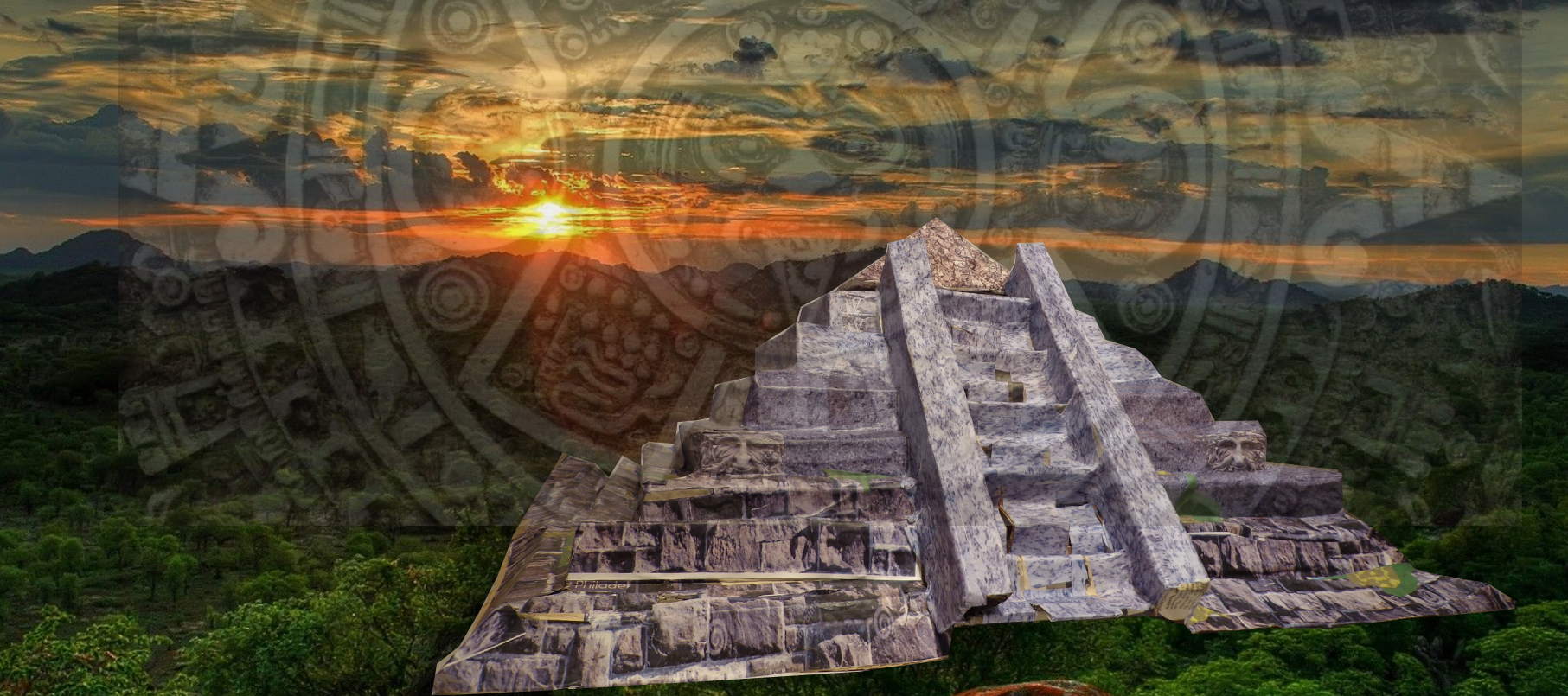
We like to romanticize the fall of Mayan civilization, and so recently as June 2020, the Daily Express reported their stone calendar predicting the end of times was still relevant. The last popularly reported expiration date for the planet had been miscalculated, and here we go again. Despite mythologizing the Mayan’s insider information about the will of the Cosmos, we certainly have reason to be attentive to Mayan history. A jungle-based civilization of 8,500,000 people, they were wiped out, not by a catastrophic bolt from the blue, but by a combination of unforeseen climatic anomalies, a failing infrastructure, and a degeneration of faith in their leaders and basic societal bonds. It could happen to anyone.
This brings me to the other reason I don’t brood about a coming Apocalypse. The lesson of the failure of Mayan civilization is not that man is subject to divine retribution for his sins and that our only hope is repentance and bloody human sacrifice. Rather, they teach us that our problems are of the physical world and reflective of the weakness of our communities. Let’s face it: the cosmos is dedicated to the propagation of life and experience. Our human vanity is that existence has been ordered for our sake alone. All life is interconnected and every molecule participates in the conscious perpetuation of the cosmic “drama” if you will. In this eternally unfolding story, human civilization means scarcely more than the reign of Tyrannosaurus Rex or a colony of novel coronavirus.
Instead of waiting for the comet that finally obliterates us or joining some cult of Godzilla, remember that violation of physical law and our failure to constantly attend the highest principles of a free society--especially concern for the basic dignity of every citizen--are what brought us to this precipice to begin with. Don’t just jump into space and expect God to redeem you. I ask myself, was I kind and charitable to my fellow man? Did I separate my plastic and aluminum, and provide for a public infrastructure to promote composting? Do I vote thoughtfully in every election, including the niggling little ones for judges and members of the school board?
Before I as an individual can abdicate my responsibility to preserve individual freedom in cooperation with the physical world, I should ask, “Have I done everything I could to advance the species?” The lone known survivor of a suicidal leap from the Golden Gate Bridge gives his testimony on YouTube. Despairing deeply, believing himself at the last, he took his leap, and diving in space, a millisecond later, a thought occurred to him: “What if I counted my straws wrong?”
--Drew Zimmerman, June 2020